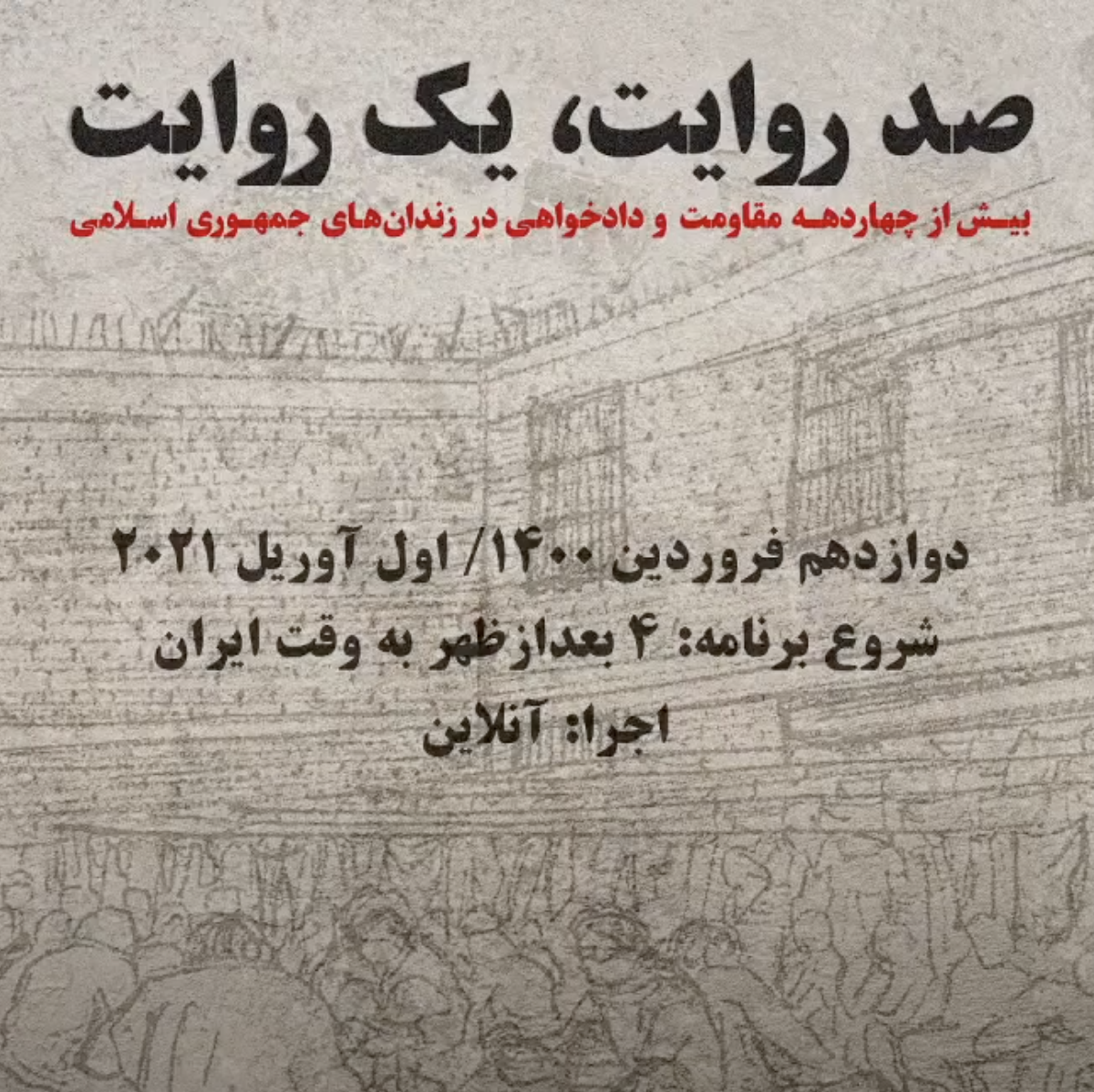
One Hundred Narratives, One Narrative
One Hundred Narratives, One Narrative is a collective effort to recount more than four decades of resistance and the pursuit of justice, repression, and torture in the prisons of the Islamic Republic of Iran.
What you hear and see is an example of the diversity and multiplicity of voices in these narratives—and of the narrators who, through their words and presence, expose the corruption of tyranny to the eyes of the world.
The hopes that blossomed from the 1979 Revolution were short-lived. With the establishment of the Islamic Republic on April 1st, 1979, and the consolidation of power by Islamists, a religiously governed system laid its foundation upon despotism and oppression. Execution, political killings, enforced disappearances, physical and psychological torture, flogging, public executions, solitary confinement, exile of prisoners, forced repentance, coerced confessions, harassment, and discrimination against the families of prisoners and victims—all have been among the instruments used to maintain and perpetuate this regime.
One Hundred Narratives, One Narrative, initiated by a group of feminist and justice-seeking activists, is an act against forgetting—a collective attempt to shed light on the inhumane conditions of prisons and the difficult circumstances of political and ideological prisoners in Iran, who have long stood as pillars of resistance and the pursuit of justice.
This project presents a selection of reports, testimonies, memories, letters, and drawings from those who, over the past four decades, have been imprisoned under the Islamic Republic. The texts reveal both the diversity of structural oppression within the regime and the persistence of resistance in the struggle for freedom and justice. The readings of these narratives—by former prisoners, as well as by the families of victims and survivors—resonate as a united and defiant voice against repression. These narratives and narrators represent only fragments of the vast body of evidence and witnesses to the regime’s dark legacy.
Let us pause and reflect upon this resonance.
Visual Artist: Barbad Golshiri
Composer / Sound Designer: Pouya Pour-Amin
© Copyright 2025. All Rights Reserved. | Daniyal Mazhari